
As a UK-certified installer with extensive experience in sophisticated CCTV and security systems, I, Gary Pearce, have witnessed the evolution of surveillance technology firsthand. For decades, traditional visible-light cameras, even those equipped with infrared (IR) illuminators, have been the cornerstone of night vision. However, their inherent limitations in challenging environments – complete darkness, fog, smoke, or even dense foliage – have always presented a significant hurdle to achieving truly robust security.
The integration of thermal imaging technology into modern security frameworks represents not merely an incremental upgrade but a transformative leap. Thermal cameras do not rely on visible light; instead, they detect the infrared radiation emitted by all objects with a temperature above absolute zero. This fundamental difference unlocks unparalleled capabilities for night vision, object detection, and, crucially, anomaly detection, making them indispensable for critical infrastructure, perimeter protection, and industrial safety across the United Kingdom.
This post will delve into the technical underpinnings of thermal imaging, meticulously compare its performance against traditional systems, outline advanced integration strategies, and provide a practical guide for deployment, all from an authoritative, engineering-grade perspective relevant to the UK security landscape.
The Fundamental Principles of Thermal Imaging
To truly appreciate the power of thermal imaging, it is essential to understand the underlying physics. Unlike conventional cameras that capture photons in the visible light spectrum (roughly 380-700 nanometres), thermal cameras operate within the infrared spectrum, specifically targeting the long-wave infrared (LWIR) band (typically 8 to 14 micrometres).
Every object with a temperature above absolute zero (-273.15 °C or 0 Kelvin) emits infrared radiation, often referred to as heat. The intensity of this emitted radiation is directly proportional to the object’s temperature, governed by the Stefan-Boltzmann Law. Hotter objects emit more radiation than cooler ones. Thermal cameras detect these minute differences in infrared energy and convert them into an electrical signal, which is then processed to create a visual image where different temperatures are represented by varying colours or shades of grey.
Key Technical Concepts:
- Microbolometers: The heart of most security-grade thermal cameras is an uncooled microbolometer sensor. This array of tiny, temperature-sensitive resistors (vanadium oxide or amorphous silicon) changes its electrical resistance when heated by incoming infrared radiation. As IR energy strikes the bolometer, its temperature increases, changing its resistance, which is then measured and translated into a digital signal.
- Noise Equivalent Temperature Difference (NETD): This is a critical specification for thermal cameras, measured in millikelvins (mK). NETD quantifies the smallest temperature difference a camera can detect. A lower NETD value indicates a more sensitive camera, capable of discerning finer temperature variations, which translates to clearer images and better detection capabilities, especially in low-contrast scenes. For robust security applications, an NETD of 50 mK or lower is generally desirable.
- Emissivity: This property describes an object’s efficiency in emitting thermal radiation. It’s a dimensionless value between 0 and 1. A perfectly black body has an emissivity of 1, meaning it emits all incident thermal radiation. Highly reflective surfaces (e.g., polished metal) have low emissivity. Understanding emissivity is crucial for accurate temperature measurement and image interpretation, as it affects how an object appears in a thermal image. Most organic materials and painted surfaces have high emissivity (0.9-0.98), making them easily detectable.
- Spectral Response: Security cameras typically operate in the LWIR band (8-14 µm) because this is where terrestrial objects emit most of their thermal radiation at ambient temperatures. This band is also less affected by atmospheric absorption compared to other IR bands.
- Frame Rate: The refresh rate of the thermal image. For general surveillance, 9Hz (frames per second) is common and avoids stringent export controls. For applications requiring smoother motion capture or more detailed analytics, 30Hz or higher may be desired, but these cameras are subject to stricter regulatory oversight in the UK due to their dual-use potential.
Limitations of Traditional CCTV for Night Vision
Before detailing the advantages of thermal, it’s pertinent to revisit the inherent drawbacks of conventional visible-light CCTV when operating in low-light or night-time conditions:
- Reliance on Light: Traditional cameras, even those with “starlight” or low-lux capabilities, require some ambient light or active illumination (e.g., IR LEDs) to produce an image.
- Active IR Illuminators: While effective to a degree, onboard or external IR illuminators present several issues:
- Limited Range: The effective range is often significantly less than the camera’s theoretical detection range.
- Hotspots and Underexposure: Uneven illumination can lead to bright hotspots close to the camera and underexposed areas further away.
- Blooming: Bright reflections from objects can overexpose parts of the image.
- Environmental Obstruction: IR light can be scattered by fog, rain, snow, or dust particles, severely degrading image quality and range.
- Security Risk: Active IR can be detected by night vision goggles, potentially revealing the camera’s position to intruders.
- Camouflage Effectiveness: Intruders can use camouflage or hide in shadows, making detection difficult for visible-light cameras.
- Image Degradation: In low light, visible-light cameras often produce grainy, noisy images with poor contrast and colour accuracy, making identification challenging.
- Susceptibility to Glare: Strong light sources (car headlights, flashlights) can easily blind visible-light cameras.
The Transformative Power of Thermal Imaging in Night Vision
The distinct operating principle of thermal cameras directly addresses and overcomes the limitations faced by traditional CCTV, offering a paradigm shift in night vision capabilities:
- True Darkness Operation: Thermal cameras generate images based on heat signatures, not reflected light. This means they operate equally effectively in absolute darkness (0 lux), moonlight, starlight, or bright daylight. There is no need for external illumination, eliminating the associated vulnerabilities.
- Unimpeded by Environmental Obscurants: Unlike visible light or near-infrared (NIR) used by conventional IR illuminators, LWIR radiation penetrates obscurants such as smoke, light fog, haze, and even light rain with remarkable efficiency. This capability is critical for perimeter security, fire detection, and surveillance in adverse weather conditions often experienced in the UK.
- Technical Explanation: The longer wavelength of LWIR radiation interacts differently with atmospheric particles. It is less susceptible to Rayleigh scattering (which affects visible light) and Mie scattering (which affects both visible and NIR) caused by water droplets or smoke particles.
- Enhanced Detection Range and Reliability: Thermal cameras can detect human-sized targets at significantly greater distances than visible-light cameras, especially at night. A human body typically presents a clear thermal contrast against the ambient background. This extended detection range allows for earlier threat identification and increased reaction time.
- Comparative Example: A typical visible-light camera with IR might offer human detection up to 50-100m, depending on illumination. A well-specified thermal camera (e.g., 640x480 resolution with a 35mm lens) can detect a human at 500-1000m or more, even through light foliage.
- Superior Target Discrimination: Thermal cameras excel at distinguishing living beings (humans, animals) from inanimate objects due to their distinct heat signatures. They can also detect residual heat from a recently departed vehicle or a hidden individual, providing critical forensic information. This reduces false alarms significantly compared to motion detection based solely on pixel changes in visible light.
- Immunity to Glare and Shadows: As they don’t rely on visible light, thermal cameras are unaffected by strong headlights, direct sunlight, or deep shadows, maintaining consistent performance across diverse lighting conditions.
- Detection Through Concealment: While thermal cameras cannot see through solid objects (like walls or dense metal), they can often detect heat sources behind light obstructions such as bushes, thin plastic sheeting, or camouflage netting that would completely obscure a visible-light camera. This is because the heat source can radiate heat, warming the surface of the obstruction, or heat can “leak” around the obstruction.
Beyond Night Vision: Anomaly Detection with Thermal Imaging
The true power of thermal imaging extends beyond mere detection in darkness. Its ability to quantify temperature differences unlocks advanced anomaly detection capabilities that are invaluable for proactive security and operational safety.
- Temperature Thresholding and Alarms: Modern thermal cameras, particularly those equipped with radiometric capabilities, can measure the temperature of specific points or areas within their field of view. By setting predefined temperature thresholds, the system can trigger alarms when temperatures deviate from the normal operating range.
- Example: Monitoring server racks for overheating, detecting abnormal temperatures in industrial machinery, or identifying pipes with unexpectedly hot or cold spots indicating a leak or blockage.
- Early Fire Detection: Thermal cameras are exceptionally effective at identifying incipient fires or hotspots long before visible flames or smoke detectors activate. By continuously monitoring critical areas (e.g., waste storage facilities, power generation sites, combustible material storage), they can detect unusual temperature increases, allowing for intervention at the earliest, most manageable stage.
- Scenario: A smouldering ember in a waste skip, a faulty electrical connection overheating in a ceiling void, or spontaneous combustion in a chemical storage area can be detected thermally before becoming a full-blown blaze.
- Perimeter Intrusion Detection: Beyond merely detecting a warm body, thermal cameras integrated with advanced video analytics can differentiate between humans and animals, track movement patterns, and trigger alerts for boundary breaches with very low false alarm rates. They are particularly effective in long-range perimeter protection where traditional fence-mounted sensors might be compromised by environmental factors or require extensive cabling.
- Industrial Process Monitoring: For factories, refineries, and manufacturing plants, thermal cameras can provide continuous, non-contact monitoring of critical equipment. This includes:
- Electrical Systems: Identifying overloaded circuits, failing transformers, or loose connections that manifest as hotspots.
- Mechanical Systems: Detecting overheating bearings, motors, or pumps, indicating imminent mechanical failure.
- Fluid Levels/Flow: Inferring liquid levels in opaque tanks or blockages in pipes by observing temperature gradients.
- Environmental Monitoring: Detecting hot spots on landfill sites indicating potential underground fires, monitoring agricultural assets for health, or even identifying areas of unusual heat discharge into waterways.
- Elevated Body Temperature (EBT) Screening (Security Context): While not a medical diagnostic tool, thermal cameras can be deployed as an initial, non-contact screening method to identify individuals with elevated skin surface temperatures in high-traffic security checkpoints. This is typically used to flag individuals for secondary screening by medical professionals, aiming to reduce the risk of contagious illnesses entering secured facilities. Strict protocols regarding privacy and data handling (GDPR) must be adhered to for such applications in the UK.
Technical Integration Considerations for UK Security Systems
Implementing thermal imaging effectively requires a meticulous approach to system design and integration. As UK-certified installers, we must consider several technical facets:
1. Sensor Selection and Specification:
- Resolution: Common resolutions include 160x120, 384x288, 640x480, and even 1280x1024. Higher resolutions provide greater detail and longer detection/recognition ranges. For most security applications requiring reliable human detection at moderate distances, 384x288 or 640x480 are generally sufficient and cost-effective.
- Lens Options (Focal Length & FoV): The choice of lens is critical and dictated by the operational requirements (detection, recognition, identification - often guided by the Johnson Criteria or similar standards).
- A wider Field of View (FoV) (shorter focal length) is suitable for covering broad areas and detecting presence.
- A narrower FoV (longer focal length) allows for greater detail and longer-range detection/recognition of smaller targets.
- Calculation Example: To detect a human at 200m using a 384x288 sensor, we might require a lens of approximately 19mm. For recognition at 100m, a 35mm lens might be necessary. Precise calculations using specific sensor dimensions and desired pixel-on-target (PoT) values are paramount during design.
- NETD: As discussed, lower NETD (e.g., <40mK) signifies better sensitivity and image quality, especially in challenging low-contrast conditions.
- Frame Rate: For standard surveillance, 9Hz is common. However, for applications with fast-moving targets or requiring sophisticated analytics, a 30Hz or higher frame rate might be preferable. Be aware of UK export control regulations for higher frame rates.
- Radiometric Capabilities: For anomaly detection involving precise temperature measurement, cameras with radiometric capabilities are essential. These cameras capture and store temperature data for each pixel, enabling highly accurate temperature analysis and alarm triggering.
2. System Architecture and Connectivity:
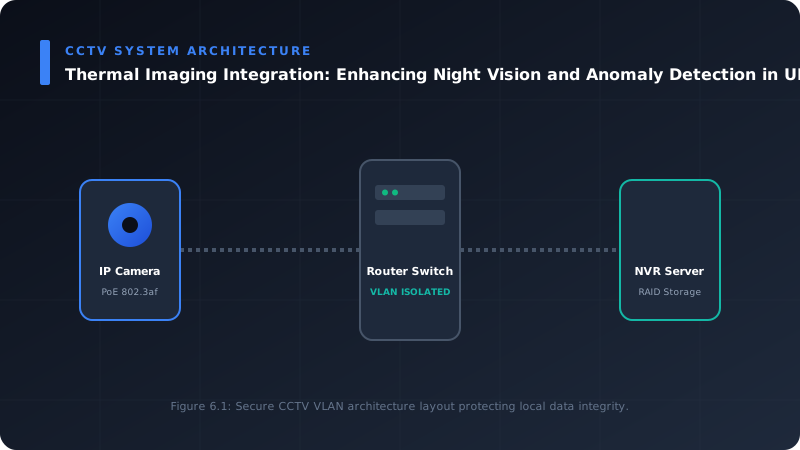
- Network Integration: Modern thermal cameras are typically IP-based, connecting directly to the network infrastructure via Ethernet. Ensure sufficient bandwidth is available, especially for higher-resolution, higher-frame-rate cameras.
- ONVIF Compliance: Prioritise cameras that comply with ONVIF (Open Network Video Interface Forum) profiles (e.g., Profile S, T). This ensures interoperability with a wide range of Video Management Systems (VMS) and Network Video Recorders (NVRs).
- Power over Ethernet (PoE): PoE simplifies installation by delivering both power and data over a single Ethernet cable, reducing cabling complexity and cost. Ensure network switches provide adequate PoE wattage.
- Hybrid Solutions: Combining thermal cameras with visible-light cameras (often in a single PTZ housing) offers the best of both worlds: thermal for reliable detection in all conditions, and visible light for detailed identification and forensic evidence when light permits. This often involves a ‘slew-to-cue’ functionality where thermal detects, and the visible camera automatically points and zooms to the target.
3. Video Analytics (VCA) and AI Integration:
- Edge vs. Server-Based Analytics: Thermal cameras often come with onboard (edge) analytics for basic functions like line crossing, intrusion detection, and object classification. For more complex scenarios or multi-camera deployments, server-based analytics may be required.
- AI/Deep Learning: The integration of Artificial Intelligence and deep learning algorithms significantly enhances the performance of thermal analytics. AI can accurately classify objects (human, vehicle, animal) based on their thermal signatures, drastically reducing false positives caused by environmental factors (e.g., shadows, moving foliage, wildlife).
- Fusion Analytics: Advanced VMS platforms can fuse data from both thermal and visible-light cameras. This allows for even more reliable detection and classification by leveraging the strengths of each sensor type, leading to superior situational awareness.
4. Regulatory Compliance (UK Specific):
- GDPR (General Data Protection Regulation): If thermal cameras are used in any capacity that involves processing personal data (e.g., tracking individuals, elevated body temperature screening), strict adherence to GDPR principles is mandatory. This includes data minimisation, purpose limitation, transparency, and ensuring adequate security measures for recorded data. A Data Protection Impact Assessment (DPIA) may be required.
- BS EN 50132 Series: Relevant British Standards for CCTV surveillance systems, particularly BS EN 50132-7 for system planning, installation, and testing. While not specifically for thermal, general principles apply.
- Export Controls: High-performance thermal cameras (e.g., high resolution, high frame rate, cooled sensors) are classified as dual-use items and are subject to stringent export controls by the UK government. Installers must be aware of these regulations when specifying and procuring such equipment.
- Data Storage and Retention: Ensure compliance with local regulations regarding the storage duration and security of recorded thermal footage.
Implementation Checklist for UK Installers/System Integrators
A structured approach is crucial for successful thermal imaging integration. As a UK-certified installer, I always follow a comprehensive checklist:
-
Thorough Site Survey and Risk Assessment:
- Identify critical assets, vulnerable perimeters, and potential intrusion paths.
- Assess environmental factors: common weather patterns (fog, rain), terrain, presence of foliage, potential heat sources (e.g., machinery, vents) that could cause false alarms.
- Determine lighting conditions at all times of day/night.
- Identify existing network infrastructure and power availability.
-
Define Operational Objectives:
- What is the primary goal? (e.g., long-range human detection, early fire detection, industrial equipment monitoring, perimeter breach notification).
- What are the required detection, recognition, and identification (DRI) distances? This will directly influence camera and lens selection.
- What is the acceptable false alarm rate (FAR)?
-
Camera and Lens Specification:
- Select appropriate thermal camera resolution (e.g., 384x288, 640x480) based on DRI and budget.
- Calculate required lens focal length to meet DRI objectives for the specific sensor size and target pixel density.
- Specify NETD, frame rate, and radiometric capabilities as needed.
- Consider ruggedized IP-rated enclosures for outdoor environments.
-
Strategic Camera Placement:
- Optimise Field of View (FoV) to cover target areas while minimising overlap and potential blind spots.
- Mount cameras at a height that provides a clear line of sight, avoiding obstructions like fences, dense foliage, or utility poles.
- Orient cameras to minimise direct solar radiation during sunrise/sunset, which can temporarily saturate the sensor.
- Avoid placing cameras where constant heat sources are in the direct FoV if they are not the target of anomaly detection.
-
Network Infrastructure Assessment:
- Verify available bandwidth for IP video streams.
- Ensure PoE switches provide adequate power budget for all thermal cameras.
- Plan for redundant network paths for critical deployments.
-
VMS/NVR Integration and Configuration:
- Confirm compatibility with the chosen VMS/NVR platform (ONVIF or specific SDK integration).
- Configure alarm rules, event triggers, and recording schedules.
- Set up temperature thresholds for anomaly detection (if radiometric cameras are used).
- Integrate with existing alarm monitoring systems or PSIM (Physical Security Information Management) platforms.
-
Video Analytics Tuning:
- Calibrate analytics rules meticulously (line crossing, intrusion zones, object classification).
- Conduct extensive testing during different times of day and in various weather conditions to fine-tune sensitivity and minimise false alarms.
- If using AI analytics, ensure proper training and deployment for specific target types.
-
Power Supply and Redundancy:
- Ensure stable and reliable power supply to all thermal cameras and associated network equipment.
- Consider uninterruptible power supplies (UPS) for critical cameras to maintain operation during power outages.
-
Commissioning, Testing, and Validation:
- Perform comprehensive system testing under real-world conditions (day, night, fog, rain) to validate performance against defined objectives.
- Verify alarm triggers, event notifications, and recording functionality.
- Document all configurations, calibration settings, and test results.
-
User Training:
- Provide thorough training to security personnel on how to interpret thermal imagery, respond to alarms, and operate the integrated system effectively.
- Explain the strengths and limitations of thermal imaging to manage expectations.
Case Studies and Application Examples
- Critical National Infrastructure (CNI): Thermal cameras are deployed at power substations, gas pipelines, water treatment plants, and data centres for long-range perimeter detection and early warning of potential intrusions or equipment failures (e.g., overheating transformers).
- High-Value Asset Protection: Luxury car storage facilities, high-security warehouses, and construction sites utilise thermal for proactive detection of intruders in complete darkness, even if obscured by dense landscaping.
- Industrial Safety: Factories monitoring conveyor belts for overheating products, chemical plants detecting leaks by temperature differentials, and waste management sites preventing spontaneous combustion fires are common applications.
- Border and Coastal Surveillance: Thermal imaging provides an unparalleled advantage in detecting individuals or small vessels approaching borders or coastlines, particularly during night, fog, or adverse weather, where traditional radar or visible cameras might fail.
Conclusion
The integration of thermal imaging technology into UK security systems marks a pivotal advancement, moving beyond the reactive limitations of traditional visible-light surveillance. Its ability to provide robust detection in absolute darkness, penetrate environmental obscurants, and enable sophisticated anomaly detection represents a significant uplift in proactive security capabilities.
As a UK-certified installer, I firmly believe that thermal cameras are no longer a niche solution but an essential component of comprehensive, high-security deployments. By understanding the core principles, meticulously planning the integration, and adhering to regulatory standards, businesses and organisations across the UK can leverage this technology to achieve unprecedented levels of situational awareness, operational efficiency, and ultimately, enhanced safety and protection.
For further consultation on how thermal imaging can be integrated into your specific security requirements, please utilise our online contact page to get in touch. We are ready to provide expert guidance and tailored solutions.
Frequently Asked Questions (FAQ)
Q1: Can thermal cameras see through walls or other solid objects?
A: No, thermal cameras cannot see through solid objects like walls, doors, or dense metal. They detect infrared radiation (heat) emitted from surfaces. If an object is completely obscured by a solid barrier, its heat signature cannot reach the camera. However, they can detect heat radiating from or around light obstructions like bushes, thin plastic, or camouflage netting if the heat source is strong enough to warm the obstruction or radiate around it.
Q2: Do thermal cameras work in complete darkness, and are they affected by adverse weather?
A: Yes, thermal cameras work perfectly in complete darkness (0 lux) because they do not rely on visible light. They detect the heat emitted by objects. Furthermore, thermal imaging is significantly less affected by adverse weather conditions like fog, haze, light rain, or smoke compared to visible-light cameras. The longer wavelength of infrared radiation allows it to penetrate these obscurants more effectively, providing a clear image where traditional cameras would be blinded.
Q3: What is the typical detection range of a thermal camera compared to a traditional IR camera?
A: The detection range of a thermal camera can be significantly greater than a traditional visible-light camera with IR illumination, especially at night. While a conventional IR camera might offer human detection up to 50-100 metres (depending on illumination quality and power), a well-specified thermal camera (e.g., 640x480 resolution with a suitable lens) can detect a human-sized target at ranges often exceeding 500-1000 metres. This extended range allows for much earlier threat detection and increased response time.
Q4: Are there any specific legal or regulatory considerations for installing thermal cameras in the UK?
A: Yes, several considerations apply in the UK.
- GDPR: If thermal cameras are used to monitor individuals, particularly in public or semi-public spaces, or for applications like elevated body temperature screening, strict adherence to GDPR (General Data Protection Regulation) is mandatory. This requires proper justification for data collection, transparent signage, data minimisation, and secure storage. A Data Protection Impact Assessment (DPIA) may be required.
- Export Controls: High-performance thermal cameras (e.g., those with high resolution, high frame rates, or cooled sensors) are classified as dual-use items and are subject to UK export control regulations. Installers must ensure compliance with these rules during procurement and deployment.
- British Standards: While there isn’t a specific thermal-only standard, general British Standards for CCTV (e.g., BS EN 50132 series) provide guidelines for system design, installation, and operation that should be considered for any security camera deployment.
📊 Technical System Design Reference Infographic
Related Technical Resource: Wi-Fi 6E Deployment Strategies: Leveraging 6GHz Spectrum for Ultra-Low Latency in UK Residences
Technical Standards and Industry Resources
- External Compliance Guidance: Industry Standards & Compliance Resources
- Partner Site Feed: Gary Pearce Portfolio Services - Firebase Blog